 Afinar
Hear what you actually played.
Afinar records you and the music together, lined up, every time you practice. No session to create, no routing to set up, nothing to remember to press. When the song ends you have something worth listening to, sitting under the score you played it from.
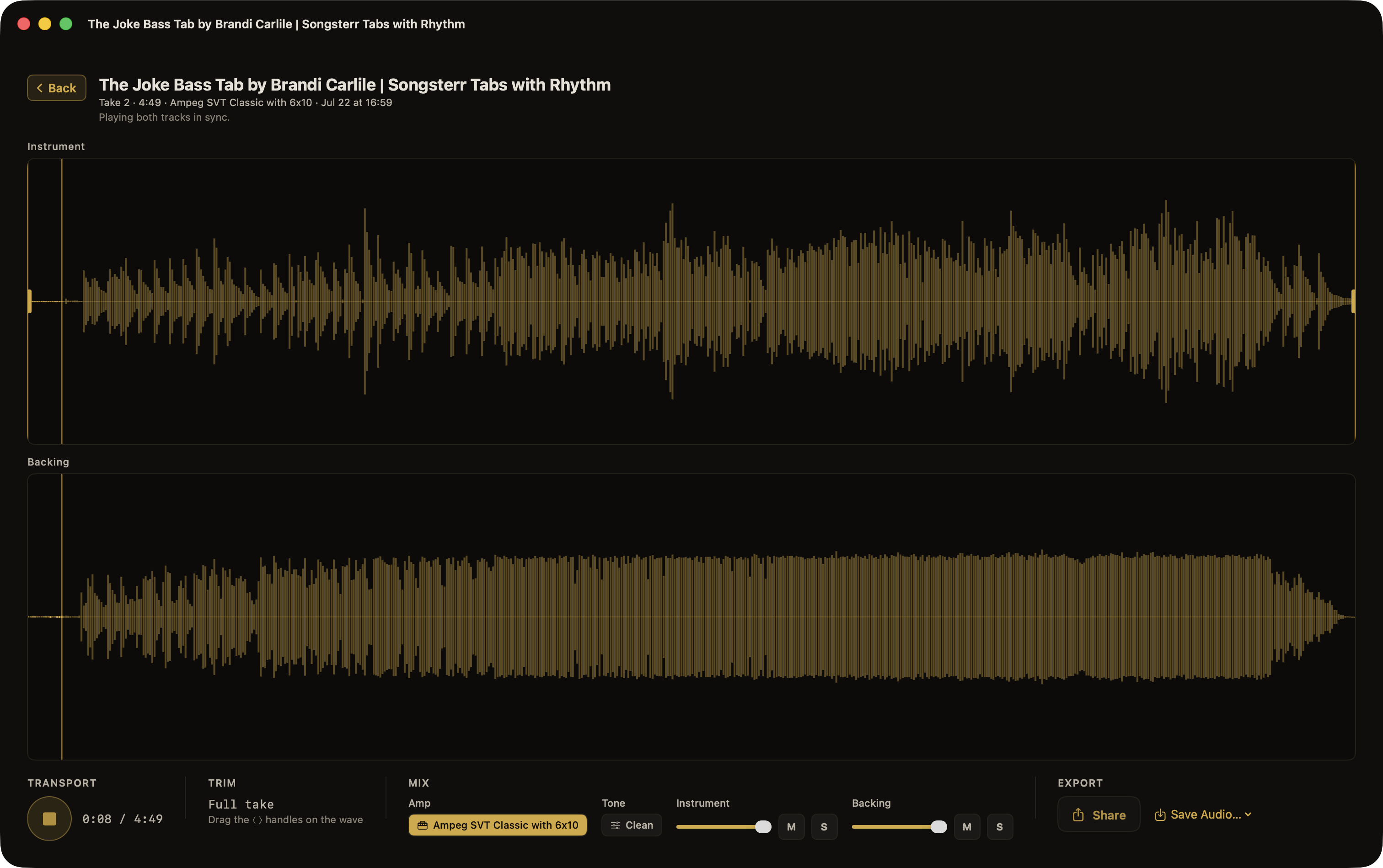
Recording stops being something you decide to do.
Press record before you start and Afinar waits. The moment the music begins, so does the recording, and it catches the first note instead of starting just after it. You don’t count yourself in, trim the front, or discover afterwards that you forgot.
What you get is called a take: you and the song, one recording, dated and numbered under that score.
You end up in the song, not over it.
The music goes into your recording straight from the source, whether that’s a tab site’s player, a video, or your own audio file. It never goes through a microphone and it never drifts out of time with you. Played back, it sounds like you were in the room with the band, which is exactly the thing you can’t tell while you’re playing.
Then hear how you really sound.
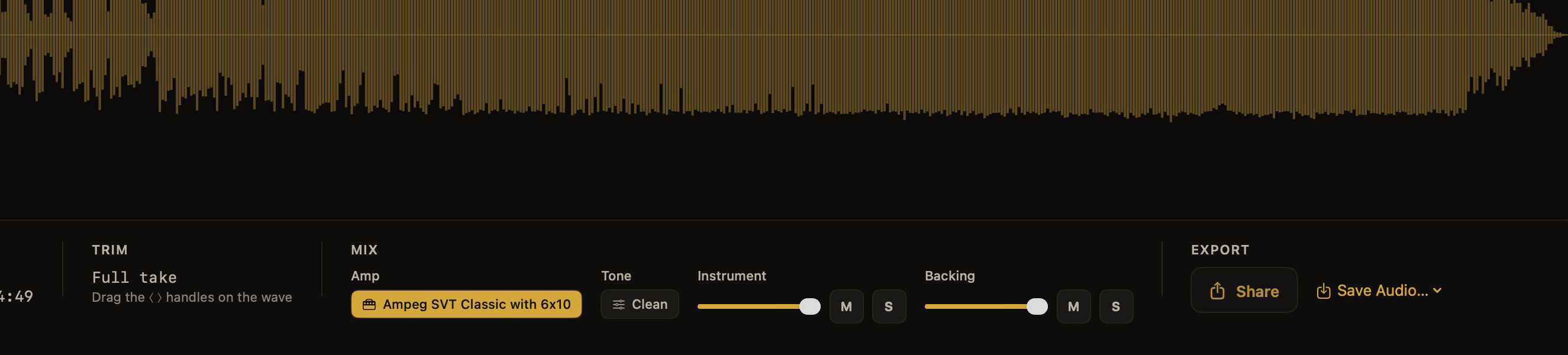
A good tone is flattering, and that’s the point of it. But Afinar always keeps your clean DI underneath, so one click strips the amp away and leaves just your hands. It is not always a comfortable listen. It is the fastest feedback you will ever get on your timing and your touch.
Trim the ends, set your level against the band, and play it for someone.
Change your mind about the tone, weeks later.
ProBecause that clean DI is always there, the amp you chose on the night is never final. Re-amp a performance you already played through a completely different rig, and the take you liked but never loved becomes the one you send people. Nothing is re-recorded, nothing is overwritten, and the original is always still there.
The one that turned out great doesn’t have to stay practice.
Some nights you catch something. Export it and it opens in Logic, Ableton, Pro Tools or anything else that reads audio. Take the mixed version, or pull your part and the backing out separately, or take just your DI and re-amp it in a session. A take you made on a Tuesday is a real recording, not a thing you have to play again properly somewhere else.
Nothing you record goes missing.
Every recording lives under the score it came from, so there’s no folder of audio files to match against a folder of sheet music six months later. They stay on your Mac, in a folder you can open, with no account and nothing uploaded anywhere.
Free for 14 days.