Afinar
Not really. Playing takes everything you have, and what’s left over isn’t enough to judge how it sounds. Afinar is a practice room for your Mac. It puts the score, the real record and your own sound in one window, and records the session while you play it, so tonight is something you can sit down and listen to.
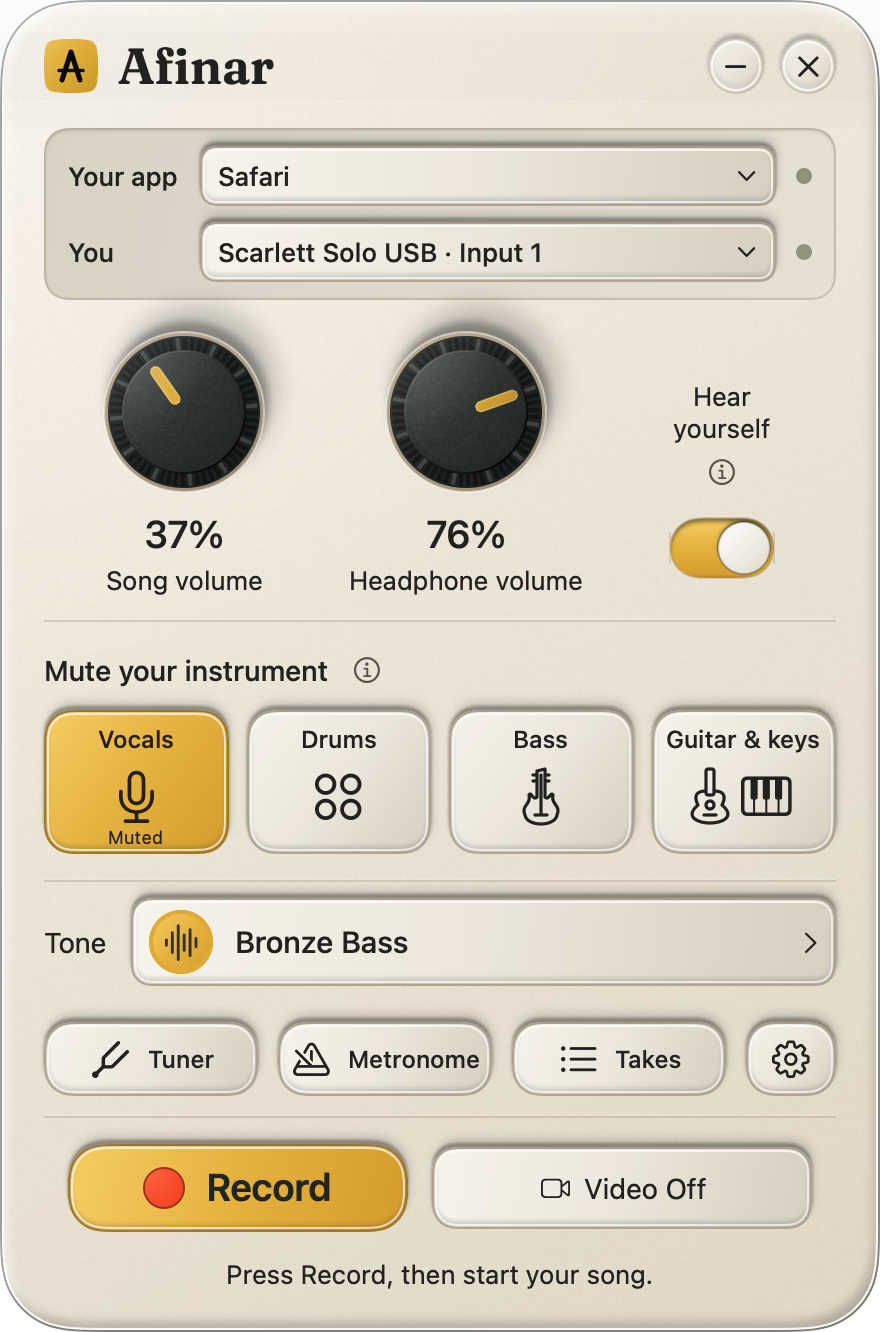
A YouTube link and your score go in. Afinar gets the audio out of the video, runs stem separation on your Mac, mutes the part you play, scrolls your score while it plays, and records you playing it.
Free for 14 days · $24.99 once · macOS 14.4 or newer
Bring what you already practice from. All of it lands in the same library, and any of it can be a score you play along to.
And Afinar has a real browser inside it, so the sites you already practice from work the way they always do, logins included. Add a page and the chrome falls away.
Songsterr, Ultimate Guitar, whatever you use that nobody else has heard of.
A PDF you bought.
A Guitar Pro or MusicXML file, or an export from MuseScore or Finale.
A lesson on Pianote or JustinGuitar.
An audio file. A YouTube link, and you don’t have to own the recording.
Any site you already use.
What’s left is the score, the recorder, and your recordings collecting underneath it.
Give a score its recording — an audio file, or a YouTube link — and it follows the music: bar for bar, repeats jumping back on time, pages turning slightly early because players read ahead. Or you sync it yourself: play the song through once and scroll along, and it follows from then on.
Stem separation, on your Mac. Afinar splits the recording into its parts, so you can mute the one you play and step into the gap. The bass drops out and you’re the bass player. Faders for everything else, if you want the drums up. It works on an audio file you add, and on a YouTube link once Afinar has the audio from it.
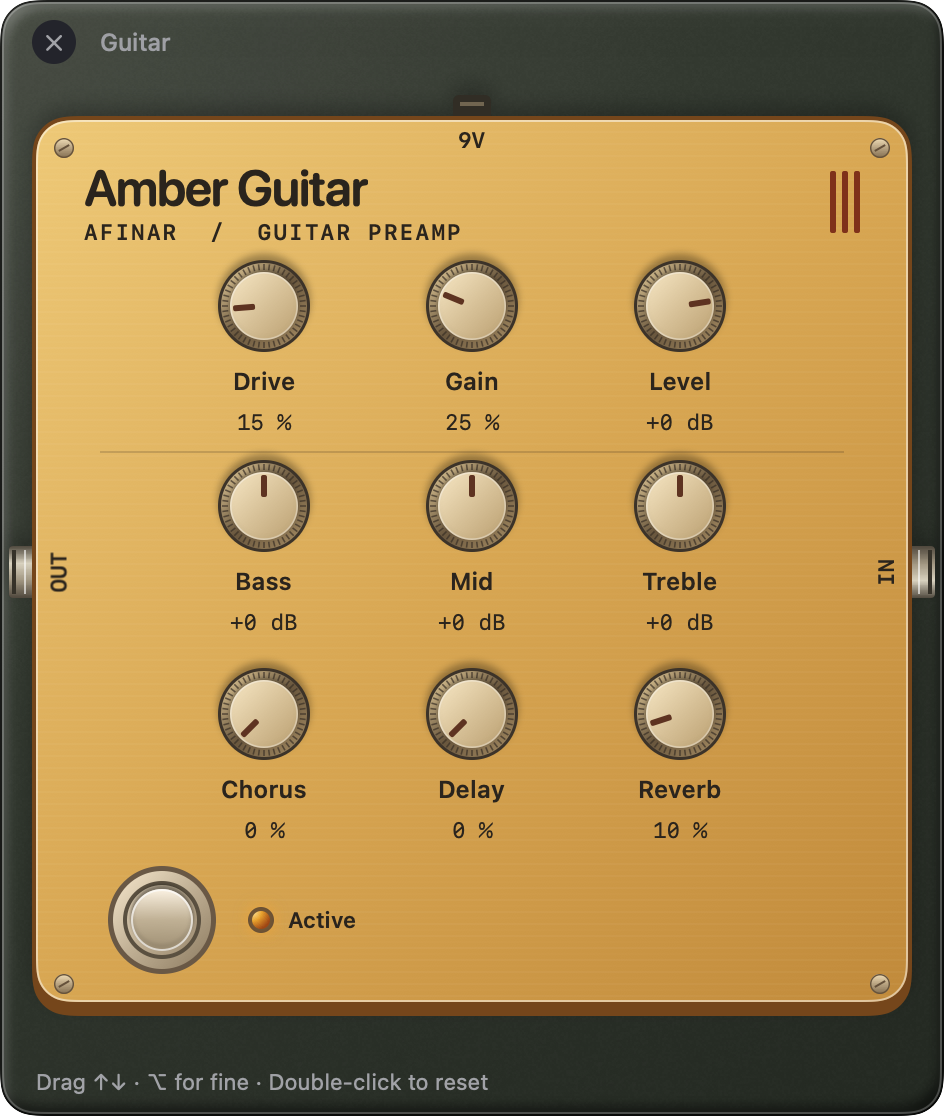
Plug into an interface and you’re monitoring through a real rig before you’ve made a decision. Guitar and bass run through captures of real amps. Voice, strings and keys run through the same compressor, EQ, delay and reverb. The room stays quiet and your headphones don’t.
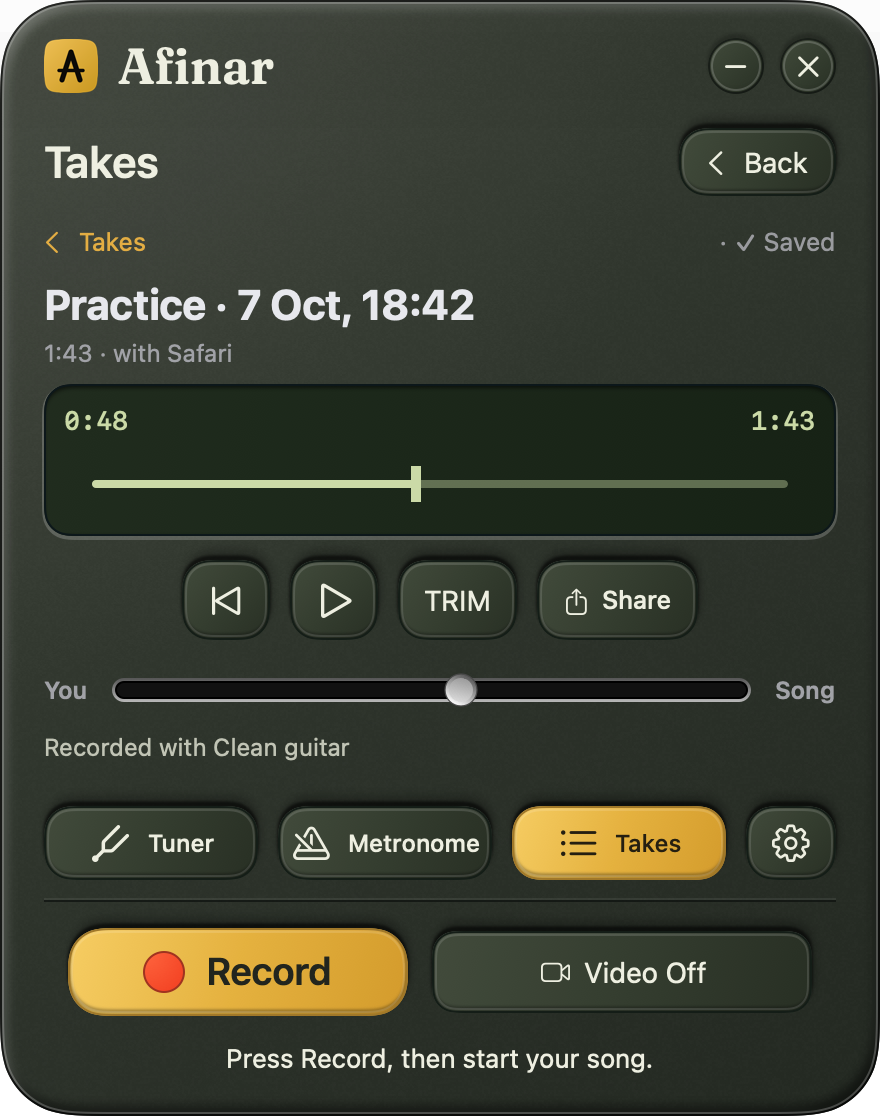
You on one waveform, the band on the other. Trim the ends, set your level against them, switch to your raw DI to hear what your hands actually did. Every take files itself under the song, dated and numbered. Export one into Logic or Ableton if the night turned out better than you expected.
You already know what a recording does to your playing. The pass that felt clean, played back, is not the pass you remember. That gap is the whole point. Practice improves on feedback, and playing alone gives you almost none: you’re too busy playing to hear it.
Recording yourself has always been the fix, and teachers have said so forever. Almost nobody does it, because it meant an interface, a DAW, a session file and twenty minutes of setup before the first note. Afinar’s contribution is smaller than it sounds and it changes everything: recording stops being a decision. It’s just what happens when you play.
Readers turn pages. Tab sites have the songs. Amp sims have the tone. A DAW will record you. You could run four of them and a cable diagram, and plenty of people do.
None of them meet. In Afinar the score, the record, your sound and the recorder are the same window, and you leave with the take.
Free for 14 days.